
Cuisine and Beverage Programs Qatar and Emirates Compared
When analyzing the cuisine and beverage programs Qatar and Emirates compared, Qatar Airways dominates in personalized flexibility with its legendary dine-on-demand service, while Emirates wins on beverage prestige, powered by its multi-million dollar vintage Bordeaux wine cellar. Your preference will depend on whether you prioritize absolute control over your dining schedule or the opportunity to sip rare, highly exclusive champagne and wine vintages.
TL;DR: Key Dining Differences
- Qatar Airways: Features a true dine-on-demand menu across all long-haul routes, allowing you to eat any dish at any point during your journey.
- Emirates: Utilizes a structured, flight-phase meal service but compensates with a massive vintage wine list and curated Moët & Chandon pairing menus.
- Prestige Beverages: Qatar offers boutique champagnes curated by a Master of Wine, whereas Emirates possesses a private cellar in France holding 6.5 million aging bottles.
- Communal Spaces: Emirates offers an active social experience at its iconic A380 Onboard Lounge, while Qatar prioritizes quiet, private sanctuary spaces.
How does dine-on-demand compare to scheduled meal services?
Qatar Airways is globally celebrated for its absolute commitment to its flexible "dine-on-demand" philosophy in Business Class. Passengers can order any starter, main course, or dessert from the à la carte menu at any time during the flight. Whether you prefer a heavy three-course meal immediately after takeoff or a light breakfast two hours before landing, the cabin crew prepares and plates each dish individually. This complete control over your schedule is incredibly valuable on long-haul routes where maximizing your sleep cycle is the highest priority.
Emirates, on the other hand, operates a more traditional, scheduled meal service tied directly to specific flight phases. While the airline has introduced greater flexibility on its newest ultra-long-haul routes, most Business Class flights still follow a structured multi-course service window. This means meals are served when the cabin crew initiates the service, which may not always align with your body clock or work schedule. However, Emirates offsets this structured approach with highly efficient service that caters to hundreds of premium passengers simultaneously without compromising on food temperature or presentation quality.
This structural difference highlights how each carrier approaches the overall passenger journey. If you value absolute independence and want to design your own timeline, Qatar's approach is unmatched. To see how these service philosophies translate into overall comfort and seat usability, explore our comprehensive Qatar Qsuite vs Emirates Business Class comparison.
Which airline serves better wine and champagne?
When analyzing beverage lists under the lens of cuisine and beverage programs Qatar and Emirates compared, both airlines invest heavily, but their commercial strategies differ immensely. Qatar Airways curates its selection under the guidance of Master of Wine Anne Krebiehl MW. The airline focuses on how wines perform at a pressurized cabin altitude of 30,000 feet, prioritizing boutique vineyards, crisp acidity, and highly tailored profiles. In Business Class, Qatar regularly pours top-tier champagnes such as Charles Heidsieck Brut and Alfred Gratien, alongside meticulously sourced Shiraz and Chardonnay.
Emirates runs a massive, independent wine investment program with its own dedicated aging cellar in Burgundy, France, which currently houses over 6.5 million bottles. This unprecedented scale allows Emirates to buy young vintage wines directly from prestigious estates and age them for up to 15 years before serving them on board. In Business Class, Emirates has a 33-year partnership with Moët Hennessy, serving exclusive pours such as Moët & Chandon Imperial Brut and Moët & Chandon Grand Vintage 2016. If you are flying First Class, Emirates remains the undisputed champion with exclusive rights to pour Dom Pérignon, including rare Rosé and Plénitude 2 vintages.
The choice between these beverage programs comes down to your personal appreciation of wine scaling. Qatar offers an intimate, highly curated tasting experience where the crew is trained to explain the subtle notes and pairings of boutique labels. Emirates offers sheer, unadulterated prestige, allowing you to sample iconic Bordeaux classics that are simply unavailable on any other commercial carrier in the world. Both programs represent the pinnacle of inflight luxury, but Emirates' massive capital investment in vintage aging gives it a slight edge for wine connoisseurs.
How do the culinary menus and signature dishes differ?
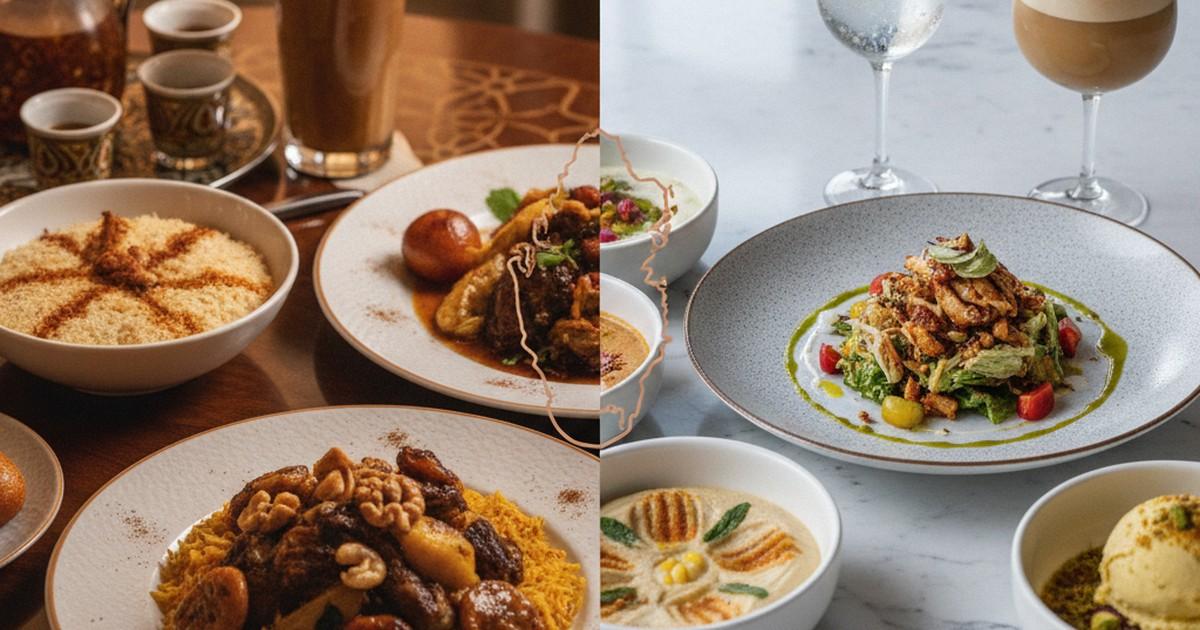
The physical presentation and flavor profiles of the food highlight the core identity of each Middle Eastern carrier. Qatar Airways utilizes individual, restaurant-style table setups with white linen, custom tableware, and flickering faux candles. Their signature Arabic Mezze, complete with warm pita, hummus, and tabouleh, is widely considered the gold standard of airline starters. Furthermore, Qatar has elevated its game by introducing a dedicated caviar service to its Business Class menu on key routes, a feature traditionally reserved for First Class.
Emirates approaches its culinary program with a grand, global menu that rotates monthly and adapts specifically to each route's destination. For instance, flights to Japan feature authentic Kaiseki multi-course meals, while European routes focus on classic continental cuisine. To further enhance their dining, Emirates partnered with Moët & Chandon's Michelin-starred chefs to design 18 exclusive dishes, each designed to pair with premium champagnes. This results in incredibly refined dishes like poached scallops with green melon and lemon gel, or roasted duck with ras el hanout-spiced couscous.
Your physical comfort while enjoying these dishes is heavily dependent on the cabin layout. You can read more about how the dining tables and physical spaces stack up in the business class seat battle between these carriers.
How do onboard bars and social spaces impact the dining experience?
One of the most significant differences in how you consume beverages on these carriers is the presence of physical social zones on board. Emirates is legendary for its massive, horseshoe-shaped Onboard Lounge located at the rear of the upper deck on its Airbus A380 aircraft. This fully staffed bar serves as an active social hub where Business and First Class passengers can mingle, order custom cocktails, and enjoy a continuous stream of warm bites, pastries, and premium spirits. It adds an interactive, lounge-like dimension to the flight that transforms a long-haul journey into a social event.
Qatar Airways also offers a beautifully designed onboard lounge on its select A380 aircraft, featuring a sleek, semi-circular bar and elegant sofa seating. However, Qatar’s lounge is designed to be a quiet, tranquil sanctuary rather than a bustling cocktail party. Qatar places its focus on curated tea services, boutique mocktails, and intimate conversation spaces. Because Qatar’s flagship Qsuite is deployed on Boeing 777 and Airbus A350 aircraft which do not have a lounge, this unique social experience is limited compared to Emirates' extensive A380 fleet.
To compare these inflight social environments in greater detail, explore our analysis of the onboard bar and social spaces available on both carriers.
What does the lounge dining experience look like on the ground?
The culinary journey begins long before boarding, and both airlines leverage their hub airports to deliver stunning pre-flight dining. At Hamad International Airport in Doha, Qatar Airways’ Al Mourjan Business Lounge (including the sprawling Al Mourjan Garden) provides exceptional dining experiences. Passengers can choose between extensive, high-end buffet stations and elegant à la carte dining rooms. Every station features chef-prepared international cuisines, fresh sushi, and a wide array of premium mocktails and vintage champagnes.
Emirates counters with massive, terminal-spanning Business Class lounges at Dubai International Airport. These lounges feature themed dining zones, including health-conscious food stations, international buffets, and a dedicated Costa Coffee bar. The absolute highlight of the Dubai lounge experience is the exclusive Moët & Chandon Champagne Lounge. Here, guests can sample multiple prestige cuvées paired with custom-designed canapés, such as smoked salmon with wasabi cream.
To understand how the ground services, airport transfers, and lounge setups compare, check out our guide on the chauffeur service and lounge experience.
Which culinary program is better for group or family travel?
Dining at 35,000 feet can be a highly social affair, but your ability to share a meal depends entirely on the seating configuration. Qatar Airways’ revolutionary Qsuite is uniquely designed to support group dining. If you are traveling as a family of four or a business team, the middle seats can be converted into a private "quad" space. This layout allows you to lower the privacy partitions and dine face-to-face, sharing starters and drinks in a communal, restaurant-like setting.
Emirates offers a more traditional forward-facing cabin layout on its Business Class aircraft. While the seats are exceptionally comfortable, they do not easily accommodate face-to-face dining or shared family meals. If you want to socialize or share a drink with family members on Emirates, you will need to head back to the A380 onboard lounge. Therefore, Qatar is generally preferred for couples and families who want to share intimate, structured meals together at their seats.
For a deeper dive into which cabin layout fits your travel party, read our evaluation on better for couples and families.
How should you choose your next luxury flight?
To make the final decision between the dining programs of Qatar Airways and Emirates, identify what you value most on a long-haul flight. Choose Qatar Airways if you want absolute control over your dining times, prefer intimate, restaurant-style table service with candles, and want to experience premium caviar in Business Class. Choose Emirates if you are a wine and champagne enthusiast who wants to experience rare vintages, enjoy tasting menus, and look forward to socializing over freshly mixed cocktails at 40,000 feet. Book your next flight with either carrier to experience the very best of Middle Eastern luxury aviation.



 Saily eSIM