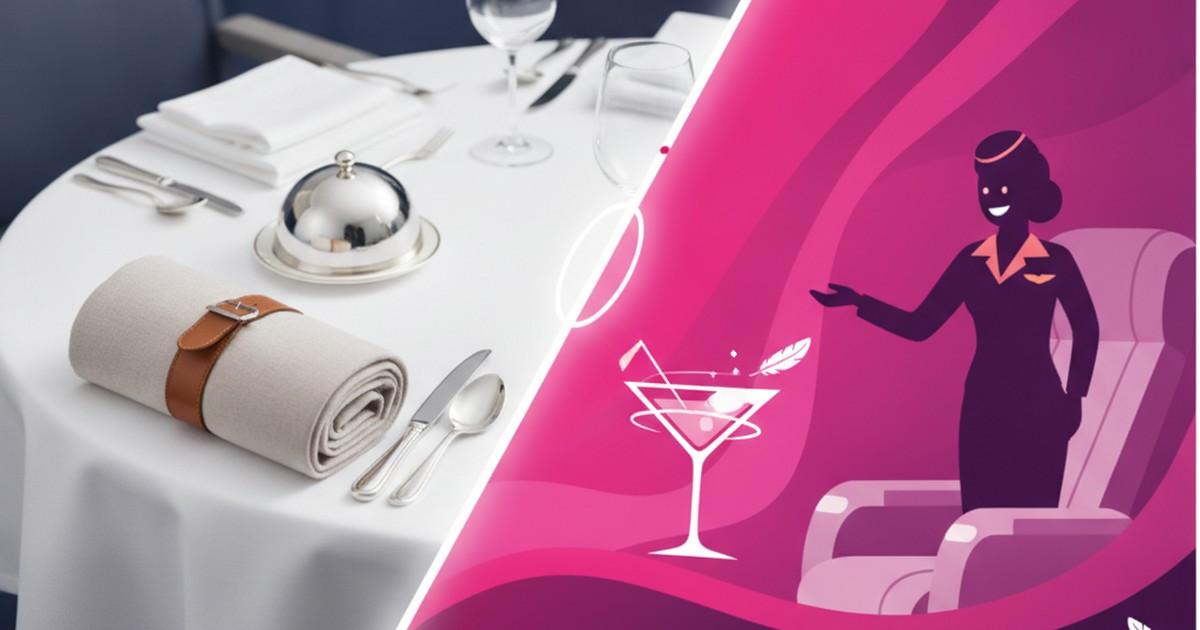

Onboard Service Style: BA’s Reserve vs. Virgin’s Flair
The primary difference in onboard service style between British Airways and Virgin Atlantic is that British Airways delivers a reserved, traditional, and formal service focused on quiet professionalism, whereas Virgin Atlantic offers a high-energy, conversational, and personality-driven "flair" style. While British Airways treats passengers with understated elegance and a classic "Sir or Madam" approach, Virgin Atlantic focuses on playful interaction, vibrant aesthetics, and modern social spaces.
Key Takeaways: BA vs. Virgin Service Style
- British Airways Style: Traditional, quiet, and reserved, focusing on formal elegance, polite distance, and a predictable routine.
- Virgin Atlantic Style: Energetic, warm, and highly conversational, highlighting bold self-expression and modern, relaxed hospitality.
- Dining Aesthetics: BA features classic multi-course meals on white crockery, while Virgin combines premium catering with whimsical touches like their signature airplane salt and pepper shakers.
- Physical Spaces: BA emphasizes individual privacy with closed-door Club Suites, while Virgin designs social hubs like "The Loft" or "The Booth" to encourage onboard interaction.
- Ground Experience: BA relies on massive, traditional airport lounges like the Galleries Club, while Virgin offers a chic, boutique resort feel in its award-winning Clubhouse.
What is the main difference between British Airways’ reserve and Virgin Atlantic’s flair?
When flying premium cabins across the Atlantic, the physical seat is only half the story. The soft product—how the cabin crew interact with you—defines your journey just as much as the physical layout. British Airways has spent decades cultivating an onboard service style deeply rooted in traditional British hospitality. This style, often described as reserve, is characterized by an understated, highly professional, and slightly detached demeanor that prioritizes your quiet comfort and personal boundaries.
Virgin Atlantic was founded as a direct, rebellious alternative to this traditional corporate style. Virgin’s onboard service style is built around the concept of flair, which encourages cabin crew members to express their unique personalities. Instead of a predictable, by-the-book routine, you can expect a warm, high-energy environment where the crew treats you like a guest at an exclusive cocktail party. This friendly, design-led approach turns the flight itself into a memorable event rather than just a transit period.
To understand how this cultural clash influences their overall premium products, read our comprehensive analysis of the UK rivalry between these two airlines. It highlights how these approaches affect everything from lounge layouts to cabin service.
How does the cabin crew interaction feel on each airline?
The way the crew interacts with you on board is the most immediate way to feel the difference between these two philosophies. On British Airways, the crew maintains a polite, respectful distance throughout the journey. They will typically address you by your title and surname (e.g., Mr. Smith or Dr. Jones), following standard service protocols meticulously. This style is incredibly efficient, ensuring that you can sleep, read, or work without any unexpected interruptions.
On Virgin Atlantic, the onboard service style is instantly more casual, conversational, and warm. Flight attendants frequently introduce themselves by their first names and address you by yours, breaking down the traditional barrier between passenger and crew. It is common for a Virgin crew member to crouch down next to your seat to take your order, sharing a quick joke or asking about your travel plans. This approach creates a highly personalized, friendly atmosphere that makes the entire cabin feel energetic and welcoming.
This difference is also visual, highlighted by the uniforms worn by each team. British Airways cabin crew wear tailored, classical uniforms designed by Oswald Boateng, reflecting a polished, heritage-driven image. Virgin Atlantic crew, by contrast, wear striking red uniforms designed by Vivienne Westwood, reflecting high-fashion drama and bold modern energy. Furthermore, Virgin updated its styling policies to allow visible tattoos, makeup, and fluid uniform choices regardless of gender.
Service pacing is another crucial element where these styles diverge. British Airways runs a highly coordinated service schedule, ensuring that meals are cleared quickly so that corporate travelers can maximize their sleep on overnight flights like New York (JFK) to London (LHR). Virgin Atlantic, while still efficient, operates with a slightly more relaxed pacing that values the dining experience as a form of leisure. This means a Virgin flight feels less rushed, making it perfect for daytime flights where you want to enjoy the atmosphere.
To summarize, these cultural differences create two highly distinct cabin environments:
- Formality vs. Warmth: BA emphasizes formal etiquette and predictable routines, whereas Virgin focuses on casual hospitality and authentic human connections.
- Grooming and Identity: BA maintains highly traditional grooming guidelines, while Virgin champions individual expression and modern, gender-neutral rules.
- Passenger Boundaries: BA crew are excellent at reading a room to stay out of your way, while Virgin crew are brilliant hosts who actively look for opportunities to engage.
Which airline offers a better dining and drinking experience onboard?
Dining at 35,000 feet is an excellent indicator of each airline's broader service philosophy. British Airways has partnered with premium catering firm Do & Co to deliver high-quality, multi-course meals on long-haul flights. The menu typically highlights classic British ingredients, accompanied by an extensive, curated wine list and traditional cheese boards with port. The service is highly structured, and meals are delivered systematically, ensuring a quiet, formal dining environment.
Virgin Atlantic takes a more creative, interactive approach to its onboard catering. Upper Class passengers are treated to a restaurant-style dining experience, complete with quirky elements like the airline's iconic, collectible Wilbur and Orville salt and pepper shakers. The crew takes pride in presenting visually stunning dishes, alongside a fun selection of custom cocktails, mocktails, and local craft beers. Rather than a rigid tray service, the meal feels curated, personalized, and deeply engaging.
The differences in culinary service style extend right through to the final meal of the flight. British Airways serves a traditional English breakfast or a classic afternoon tea, focusing on scones, clotted cream, and high-quality British tea blends. Virgin Atlantic frequently partners with famous modern chefs to curate contemporary breakfast options, including unique vegetarian dishes and artisanal coffees. This culinary philosophy ensures that even the morning meal reflects Virgin's signature flair and commitment to modern food trends.
For a full breakdown of the menus, beverage programs, and culinary philosophies of both airlines, check out our comparative guide to their food and drink offerings. You will find that while BA excels in classic elegance, Virgin wins on contemporary flair and creativity.
How do the physical seat layouts and social spaces support these service styles?
An airline's onboard service style is heavily influenced by the physical layout of the aircraft cabin. British Airways’ premium cabin strategy is centered almost entirely around individual privacy and quiet productivity. The modern BA Club Suite features a fully closing door, direct aisle access, and a reverse-herringbone layout that shields you from the rest of the cabin. This private cocoon makes it incredibly easy for the cabin crew to respect your personal boundaries, only stepping in when you actively request service.
Virgin Atlantic, conversely, designs its Upper Class cabins to actively encourage social interaction. While they offer excellent private seats on their modern Airbus A350-1000 and A330neo aircraft, they also incorporate unique communal spaces. Passengers can hang out at the physical onboard bar, sit in "The Loft" to watch a movie with friends, or share a drink in "The Booth." These spaces give the cabin crew a unique stage to showcase their warm, charismatic hosting skills in a relaxed, open environment.
It is also worth noting that the service dynamic changes depending on the specific aircraft you fly. On Virgin's Airbus A330-900neo, the crew services the exclusive Retreat Suite—two oversized suites at the front of the cabin—with a heightened level of detail that rivals traditional first-class. British Airways provides a more uniform service across its Club Suite cabins, regardless of whether you are flying on a Boeing 777 or an Airbus A350. This creates a highly predictable experience where you always know exactly what level of service and privacy to expect.
To see how these distinct physical cabin designs compare head-to-head, read our deep dive into the seat showdown. This will help you decide if you prefer private isolation or a lively social atmosphere.
How do the pre-departure ground experiences compare?
The service style of both airlines is established long before you actually board the aircraft. At London Heathrow, British Airways operates from its massive hub in Terminal 5. Premium passengers have access to the spacious Galleries Club Lounges, while First Class travelers can enjoy the prestigious Concorde Room. These lounges feature traditional British decor, quiet working alcoves, and a wide variety of buffet and sit-down dining options, offering a highly structured, peaceful environment.
Virgin Atlantic, operating out of Heathrow Terminal 3, offers a much more exclusive, high-energy ground experience. Upper Class passengers can arrive via the dedicated Upper Class Wing, a private drive-through check-in area that lets you bypass the main terminal entirely. From there, you gain access to the world-famous Virgin Atlantic Clubhouse. This lounge is designed like a luxury boutique hotel, featuring an extensive cocktail bar, a la carte dining, pool tables, and an outdoor viewing deck, setting a vibrant tone for your upcoming flight.
To see which of these premium departure experiences is the right fit for your travel needs, check out our comparison of the lounge showdown. The contrast between BA’s expansive lounges and Virgin’s trendy Clubhouse is stark.
How should you book your next flight using points or miles?
Because British Airways and Virgin Atlantic offer such different onboard experiences, your final booking decision may ultimately depend on your loyalty program strategy. Fortunately, both airlines belong to major global alliances, providing fantastic redemption opportunities. British Airways is a key member of the oneworld alliance, allowing you to use Avios to book flights across a massive global network. Virgin Atlantic is a member of the SkyTeam alliance, meaning you can redeem Virgin Points for flights with Delta, Air France, KLM, and many other global partners.
Maximizing your points strategy requires understanding how fuel surcharges, award availability, and peak-travel dates affect your redemptions. To learn how to get the absolute most value out of your hard-earned miles, read our expert guide on Avios vs Virgin Points. This comparison is vital for planning your trans-Atlantic travel.
Which onboard service style is right for your travel needs?
Ultimately, choosing between British Airways’ reserve and Virgin Atlantic’s flair depends entirely on your personal preferences and travel goals. If you prefer a quiet, highly predictable, and deeply private flight where you can focus on sleep or work, British Airways is the perfect match. However, if you want your journey to feel like a celebration, value engaging personal interactions, and want to socialize in beautifully designed onboard spaces, Virgin Atlantic is the clear winner.
Now that you know the key differences, review your upcoming travel schedule, compare the aircraft operating your specific route, and book the onboard experience that perfectly suits your style.



 Saily eSIM