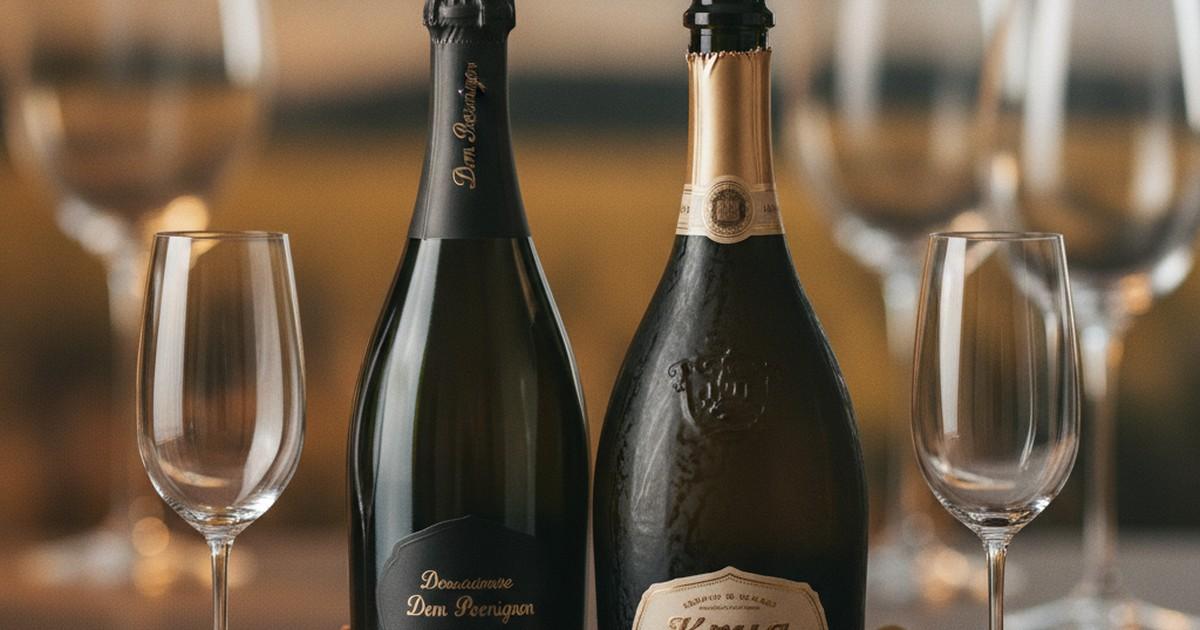

Dom Perignon and Krug A Champagne Lover's Comparison
Dom Pérignon is a sleek, vintage-only Champagne fermented in stainless steel to showcase a single year's harvest, whereas Krug is a rich, oak-fermented, complex blend of over 120 wines from multiple vintages. They sit at opposite ends of the stylistic spectrum, offering collectors a choice between Dom Pérignon’s sharp precision and Krug's opulent, nut-and-brioche abundance.
To navigate this legendary rivalry, here is a quick overview of how these Champagnes compare:
- Philosophy: Dom Pérignon is strictly a single-vintage Champagne, whereas Krug Grande Cuvée is a multi-vintage masterpiece.
- Vinification: Dom Pérignon uses stainless steel to preserve fruit purity, while Krug ferments base wines in seasoned oak barrels.
- Taste: Dom Pérignon is linear and mineral-driven, while Krug is broad with layers of hazelnut and pastry.
- Aging: Dom Pérignon uses three Plénitude stages, while Krug Grande Cuvée ages for seven years before release.
What is the difference in winemaking philosophy between Dom Perignon and Krug?
The core difference between these two legendary Champagne houses lies in their approach to capturing time. Dom Pérignon operates under a strict vintage-only mandate, meaning every bottle must be produced from grapes harvested in a single year. If the growing season is deemed substandard, no vintage is declared, which embraces the natural variation of each unique year.
Krug treats the art of blending as the ultimate form of creative expression. Joseph Krug founded the house in 1843 to craft the most generous expression of Champagne every year, independent of the weather. Krug builds a vast library of reserve wines that act as a palette, prioritizing a rich house style that offers immense depth.
Why does Dom Perignon only release vintage Champagne?
Dom Pérignon’s dedication to vintage Champagnes is an exercise in creative constraint and quality control. Over the last century, the house has declared only 45 vintages, ensuring each release is a highly collectible work of art. The current release, the Dom Pérignon 2015, is a precise blend of 51% Pinot Noir and 49% Chardonnay, reflecting a warm growing season.
This vintage-only approach means that drinking Dom Pérignon is a journey through liquid history. A bottle of the 2008 vintage offers crisp, electric acidity due to a cool ripening period, while the 2012 vintage displays a more opulent texture. If a year is too challenging, the house simply skips it, which further elevates its prestige.
How does the Krug Edition system work?
Because Krug’s flagship Champagne is a blend of multiple vintages, the house does not list a single harvest year. Instead, they use a sequential "Édition" numbering system to help collectors identify and track individual releases. This labeling system counts every annual blend created since 1843, allowing wine lovers to look up the exact base vintage.
For instance, the stunning Krug Grande Cuvée 173ème Édition is built around the challenging 2017 harvest. To overcome weather obstacles, Krug’s blending team selected 150 individual wines from 13 different years. This meticulous composition ensures that the Grande Cuvée maintains its signature richness, proving that blending can triumph over nature's unpredictability.
How do their fermentation and aging methods differ?
The vessels used during the initial fermentation process play a monumental role in shaping the texture of these Champagnes. Dom Pérignon utilizes state-of-the-art, temperature-controlled stainless steel vats to ferment its juices. This anaerobic environment prevents oxygen contact, preserving the primary fruit flavors and clean minerality, creating a highly focused, precise wine.
Krug remains dedicated to traditional wooden fermentation, utilizing small, 205-liter seasoned oak casks. These wooden barrels are not intended to add heavy vanilla flavors, as the wood used is deliberately neutral. Instead, the porous oak allows for a slow micro-oxygenation of the fermenting juice, which rounds out the sharp edges of the acidity.
Why does Krug ferment in oak barrels?
The decision to ferment in oak barrels is central to Krug's ability to age reserve wines for decades. The micro-oxygenation that occurs in the casks helps build a stable chemical structure, making the base wines highly resistant to premature oxidation. Chef de Cave Julie Cavil manages an extensive library of these oak-fermented reserve wines.
This traditional wood vinification also contributes directly to the complex, secondary aromas that emerge as the Champagne ages. It develops those famous notes of toasted almond, hazelnut, and warm spices that Krug lovers crave. This process is a non-negotiable step in creating a Champagne with such unmatched power and structural longevity.
What are the Dom Perignon Plenitudes?
Dom Pérignon approaches aging through a unique concept called "Plénitudes," which refers to specific windows where the wine reaches a new peak of development. The house keeps a portion of each vintage on its yeast lees, releasing them in three distinct stages over several decades, with each stage offering a completely different personality.
- Plénitude 1 (P1): Released after approximately 8 years, showcasing youthful vigor and primary fruit profiles.
- Plénitude 2 (P2): Released after 15 to 18 years, revealing a dramatic surge in energy and mineral intensity.
- Plénitude 3 (P3): Reached after 25 to 30+ years, resulting in a Champagne of extraordinary complexity.
What do Dom Perignon and Krug taste like side-by-side?
Tasting Dom Pérignon and Krug side-by-side highlights two completely different styles of luxury. Dom Pérignon opens with an elegant, smoky reduction, often described by sommeliers as gunpowder. On the palate, it is sleek, energetic, and focused, showing vibrant flavors of green apple, white peach, and chalky minerality. The finish is clean, salty, and incredibly precise.
Krug Grande Cuvée is an explosion of flavor that coats the entire palate with comforting textures. It greets the nose with intense aromas of freshly baked brioche, toasted hazelnuts, and acacia honey. Once you take a sip, you are met with an incredibly rich, full-bodied texture that balances deep, savory notes of marzipan with a brilliant line of acidity.
Which Champagne is served in international first-class cabins?
Both elite Champagnes are highly sought-after icons in ultra-luxury commercial aviation. If you are planning a trip, comparing luxury suite comparison options reveals how top airlines compete. Singapore Airlines famously serves both Krug Grande Cuvée and vintage Dom Pérignon simultaneously in first class. Emirates, conversely, has a long-standing, exclusive partnership to serve vintage Dom Pérignon, including rare vintage releases.
Sipping these world-class Champagnes while relaxing in double bed suites represents the absolute pinnacle of high-altitude indulgence. To make the journey even more memorable, you can pair your glass of vintage bubbles with a hot shower, which is a legendary onboard shower perk that completely redefines long-haul flying.
Your premium wine journey begins on the ground. Comparing premium ground services, specifically luxury airport lounges, reveals the level of pre-departure dining and fine wine pours available to travelers. Before booking your next luxury trip, conducting a careful review of evaluating the splurge will help you decide if these ultra-premium experiences are worth the investment.
How much do Dom Perignon and Krug cost?
Prestige Champagne is a significant financial investment, and both houses command premium prices that reflect their global status. A standard bottle of a recent Dom Pérignon Brut Vintage typically retails between $250 and $350. Older, highly rated vintages or rare releases like the Plénitude 2 (P2) bottles routinely command prices ranging from $500 to over $1,000.
Krug Grande Cuvée carries an even higher entry-level price point, with a standard bottle of the latest Édition retailing from $300 to $400. Because Krug Champagnes are built to age gracefully, older Éditions command massive premiums among collectors. For the ultimate luxury, Krug’s ultra-rare, single-vineyard bottlings like the Clos du Mesnil routinely sell for over $1,500.
Which Champagne should you choose for your next celebration?
The choice between Dom Pérignon and Krug ultimately comes down to your personal taste preferences and the style of celebration. If you prefer a crisp, energetic, and highly refreshing wine that highlights pure fruit expression and mineral tension, Dom Pérignon is your ideal choice. Its iconic, universally recognized shield-shaped label also makes a powerful statement of luxury.
If you prefer a highly complex, powerful, and deeply savory wine with an incredibly rich mouthfeel, Krug is the undisputed winner. Its robust, oak-aged style makes it less of a simple aperitif and more of a serious, gastronomic wine. Krug is the bottle of choice for serious connoisseurs looking for a deeply contemplative tasting experience.
To truly appreciate the legendary differences between these two iconic houses, consider organizing a dedicated side-by-side tasting with a small group of friends. Secure a bottle of a recent Dom Pérignon vintage alongside the latest Krug Grande Cuvée Édition, and chill them slowly to 10-12°C. Use wide-mouthed white wine glasses to allow their magnificent aromas to fully blossom.



 Saily eSIM