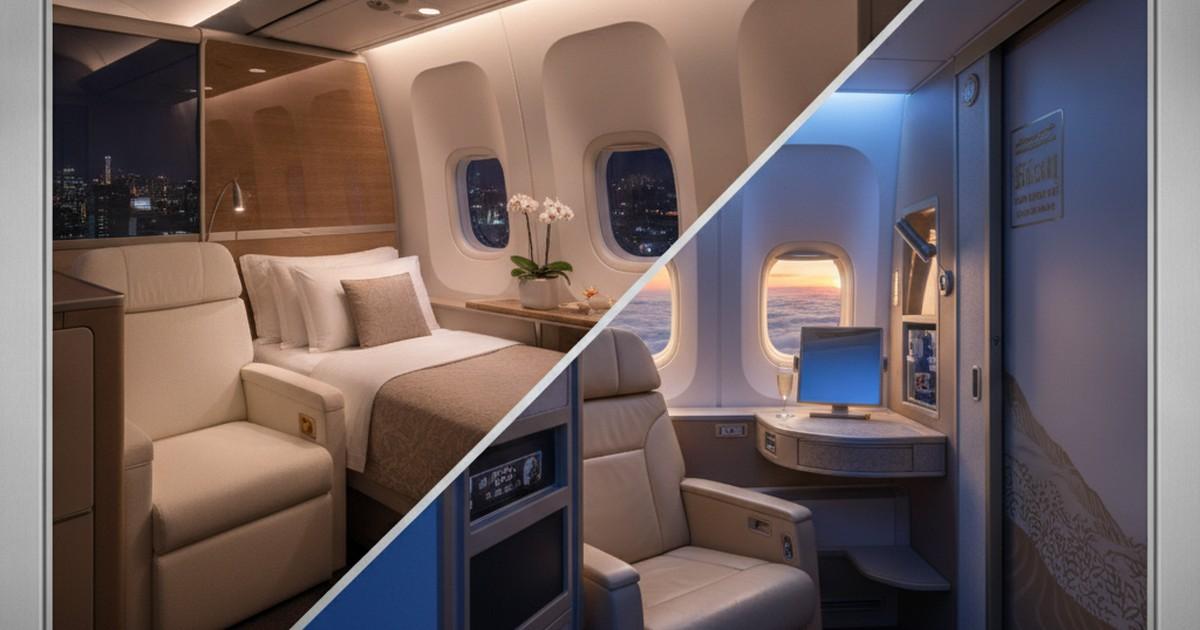

Singapore Airlines Suites vs Emirates First Class A380 Luxury
Singapore Airlines Suites beats Emirates First Class on raw personal space, bedroom-style privacy, and quiet elegance, while Emirates wins for travelers seeking maximum spectacle, onboard showers, and a lively social bar. Choosing between these aviation giants depends on whether you prefer a massive standalone apartment in the sky or a highly animated, gold-trimmed luxury experience.
Key Takeaways: Singapore Suites vs Emirates First Class
- Cabin Space: Singapore Airlines provides 50 square feet of space per suite with a separate swivel chair and bed, whereas Emirates offers an enclosed 21 square foot suite with a converting seat.
- Signature Features: Emirates boasts its legendary onboard shower spa and active upper-deck lounge bar, while Singapore relies on its massive dual-vanity bathrooms and double-bed configuration.
- Dining and Champagne: Singapore delights with "Book the Cook" pre-orders and a dual-champagne program, while Emirates dominates with unlimited caviar and rare vintages.
- Lounge Experience: The Private Room in Singapore offers an intimate, fine-dining haven, whereas Emirates' Dubai lounges are colossal, occupying entire terminal levels with direct boarding.
How do the cabin layouts and suite designs compare?
Singapore Airlines features only six Suites at the front of the upper deck of its Airbus A380, arranged in an ultra-exclusive 1-1 layout. Each passenger enjoys a physical room with an armchair upholstered in full-grain Poltrona Frau leather and a separate flat bed. Couples traveling together can lower the partition between adjacent suites to form an ultimate double bed, a feature that completely transforms the premium flying experience.
Emirates, on the other hand, configures its A380 with 14 First Class Suites at the front of the upper deck in a 1-2-1 layout. While the space is undeniably luxurious, it feels significantly tighter and busier than Singapore's cavernous setup. Each Emirates suite features high sliding doors, wood veneers, a personal motorized minibar, and a plush seat that reclines into a fully flat bed.
Which cabin layout feels more spacious?
Singapore Airlines wins on raw physical footprint. With only six suites in the space where other airlines might put 12 or 14 seats, the room to walk around within your suite is unmatched. You can close your door and literally have a private room with enough floor space to stretch out comfortably.
Emirates feels more like a cozy, highly engineered capsule. It is filled with gadgetry, like motorized doors, tablet controllers, and a pop-up minibar. While highly entertaining, it lacks the open, airy architectural feel of the Singapore counterpart.
Which airline offers the best bed and personal privacy?
Singapore's sleeping arrangement is a triumph of design. Because the bed is separate from the seat, you do not have to compromise on seat comfort to enjoy a flat mattress. The crew will make up your bed with fine Lalique bedding, dual pillows, and a plush duvet while you relax in your swivel chair.
Contrast this with other regional and long-haul products. For example, a Japanese luxury duel reveals that even the finest open-suite configurations cannot match this level of dual-surface luxury. Similarly, a classic East Asian matchup shows that typical premium seats often require converting your main seat into a bed, which limits your in-flight flexibility.
How does the sleeping experience compare on long-haul routes?
Emirates offers a very comfortable, deep-padded seat that slides down into a 78-inch fully flat bed. The cabin crew adds a thick mattress topper, a cozy duvet, and premium pillows to ensure a great night's rest. However, because you are sleeping on the same surface you sit on, the mattress structure feels slightly more contoured than Singapore's completely flat, dedicated mattress.
Furthermore, Singapore's unique swivel chair allows you to face the window or the television while relaxing, whereas the Emirates seat keeps you in a fixed forward-facing position. This makes Singapore's suite feel far more like a luxury hotel room than a traditional aircraft seat.
What are the onboard dining and beverage highlights?
Singapore Airlines is famous for its culinary excellence, led by its International Culinary Panel of world-renowned chefs. Their pre-order service allows you to choose from an extensive menu of gourmet dishes, including classic lobster thermidor, prime beef fillet, and authentic local Singaporean dishes.
Their champagne service is equally legendary, often featuring two of the world's most prestigious champagne houses simultaneously. For wine enthusiasts, reviewing a champagne comparison guide reveals how pouring both Dom Pérignon and Krug onboard represents the absolute pinnacle of luxury.
How does Emirates compete on in-flight catering?
Emirates is the master of high-end indulgence. Their dine-on-demand service allows you to order multi-course meals at any time during the flight, including unlimited portions of premium caviar served with traditional garnishes. Their wine cellar features extremely rare vintages, including Dom Pérignon Plénitude 2, which is exclusively poured in their first-class cabins.
The Emirates dining table is large and sturdy, allowing for an elegant restaurant-style setup with fine linens and Royal Doulton chinaware. It is a highly theatrical affair, complete with personalized service that makes every meal feel like a special event.
How do the unique onboard amenities compare?
Emirates' ultimate trump card is its shower. It has two shower spas at the front of the upper deck, which are available to first-class passengers. Each passenger gets a 25-minute slot with 5 minutes of running hot water.
Having access to an onboard shower suite makes long-haul flying feel like a luxury resort stay. This space features heated floors, a large vanity area, premium Bvlgari toiletries, and custom-designed wellness products.
Is the Emirates onboard bar worth the hype?
The Emirates onboard lounge is one of the most famous features in commercial aviation. Located at the rear of the upper deck, it serves as a social hub where you can chat with other premium passengers while enjoying high-end cocktails, fine wines, and light bites.
Singapore Airlines, by contrast, focuses entirely on serene, private relaxation. Their A380 has no lounge or bar area, meaning passengers spend the entire flight in the quiet comfort of their suites. If you prefer a social, lively atmosphere, Emirates is the clear choice.
How do pre-flight ground services differ?
Ground services set the stage. At Singapore Changi, Singapore Airlines offers an ultra-exclusive lounge experience.
Comparing the premium ground lounge services reveals that Singapore's 'The Private Room' is unmatched for quiet fine dining. It features a bespoke à la carte menu, premium wines, and dedicated shower suites that are completely separate from the main lounge passenger traffic.
Which lounge experience offers better service?
The Private Room at Changi Airport is designed like an intimate, high-end restaurant with sit-down table service, premium champagne, and a quiet, exclusive ambiance. It is reserved solely for Singapore Airlines' own First Class and Suites passengers, keeping the guest count exceptionally low.
Emirates' lounges in Dubai are incredibly vast, sometimes occupying an entire floor of the terminal. While they offer fantastic amenities like complimentary massage treatments and fine dining buffets, they can feel less exclusive due to the high volume of premium travelers passing through.
How do you book these suites with points or cash?
Cash rates for these suites regularly exceed $10,000 to $20,000 round-trip. Using miles is the primary goal for savvy travelers.
Singapore Airlines KrisFlyer is the main currency for booking Suites, and availability is extremely scarce. Doing a detailed value analysis comparison shows how to maximize your hard-earned credit card points for these redemptions.
What is the best strategy for securing award seats?
To book Singapore Suites, you must look for award space right when the calendar opens, which is 355 days in advance. You will need to transfer points from major credit card programs directly to Singapore Airlines KrisFlyer.
For Emirates First Class, award seats are often released in waves, with the best availability appearing either far in advance or within 14 days of departure. Keep an eye out for high carrier surcharges, which can exceed $1,000 per one-way segment on certain routes.
How do other premium business class products compare?
While first-class suites represent the peak of luxury, premium business class cabins offer incredible comfort at a fraction of the cost. If you are flying across the Atlantic, analyzing a transatlantic business shootout helps you choose the best flat-bed seat between major US carriers. For flights within Asia, our regional business class guide details how carriers maintain exceptionally high service standards even on shorter routes.
If you are planning a trip to Europe, reviewing a comprehensive European business class analysis will guide you through the differing soft products of EU flag carriers. Meanwhile, those flying within the United States can look at a US transcontinental battle to find the best lie-flat seats for coast-to-coast travel.
On the highly competitive London to New York corridor, a classic UK airline rivalry showcases how modern suite designs with sliding doors have revolutionized transatlantic flight. In the Middle East, the legendary Middle East business matchup pits Qatar's Qsuite against Emirates' standard business class. Finally, a Gulf business comparison details the fierce competition between Abu Dhabi and Doha for premium cabin supremacy.
What is your next step to experience this ultimate luxury?
Check award space now by transferring flexible bank points to Singapore Airlines KrisFlyer or Emirates Skywards to lock in your next dream journey. For more luxury travel reviews, compare our detailed guides to find the perfect premium product for your upcoming flight.


 Saily eSIM