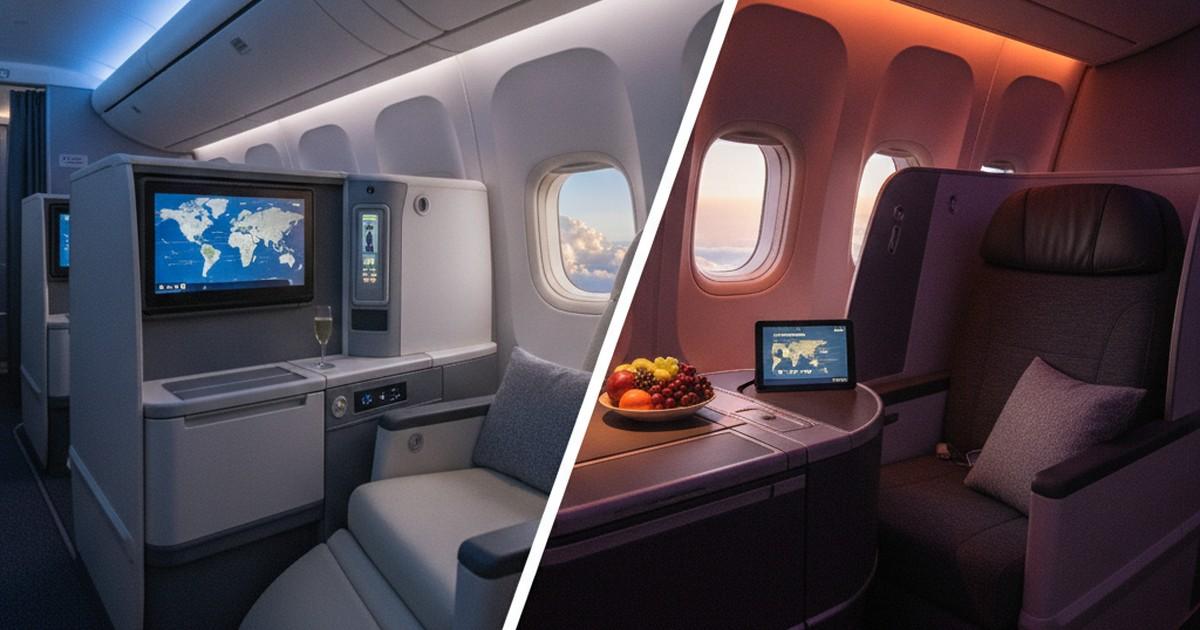
Korean Air Apex Suite vs Asiana Business Smartium

For premium travelers choosing between South Korea's premier airlines, Korean Air’s Apex Suite delivers unmatched window seat privacy and exceptional multi-course dining, while Asiana’s Business Smartium offers a consistent 1-2-1 direct aisle access layout with superior lie-flat sleeping space. However, because the Asiana Airlines brand is slated to be completely integrated into Korean Air by the end of 2026, booking the historic Smartium product represents a vanishing transpacific opportunity.
TL;DR: The Key Takeaways
- Privacy Champ: Korean Air's Apex Suite (Prestige Suite) offers incredible isolation in window seats (such as 14A on the B777-300ER), which feel like individual private cabins.
- Sleep Ergonomics: Asiana's Business Smartium features a flat bed extending up to 83 inches on the A380 and 77 inches on the A350-900, offering superior leg space.
- Onboard Dining: Both airlines serve exemplary Korean meals, though Korean Air has a slight edge in premium presentation.
- Booking Urgency: Asiana’s brand retires in late 2026, making Star Alliance award bookings for Business Smartium an immediate priority.
Which Seat Cabin Layout Offers More Privacy?
When analyzing the premium experience on long-haul flights, cabin design determines how rested you will feel upon landing. The debate between Korean Air’s Apex Suite and Asiana’s Business Smartium highlights two contrasting design strategies. When examining the seat layout and privacy, the difference between these two philosophies becomes immediately apparent.
Korean Air's Apex Suite uses a 2-2-2 layout on Boeing 777-300ER and Boeing 787-9 jets. Staggered seats ensure direct aisle access for everyone, while window seats are pushed forward to create an incredibly private, screen-protected nook.
In contrast, Asiana's Business Smartium uses a standard 1-2-1 staggered layout. While this setup guarantees direct aisle access for everyone, the absolute visual isolation is lower than Korean Air's legendary window seats.
This design contrasts with other premium options; for example, the layout in the united polaris vs delta one comparison relies on heavily angled configurations. Similarly, the british airways club suite vs virgin atlantic rivalry showcases modern sliding doors, whereas Korean Air's window seats achieve incredible privacy purely through smart staggering.
How Do the Seats Compare in Bed Mode and Sleeping Comfort?
Long-haul transpacific flights require a seat that easily converts into a comfortable, supportive flat bed. Korean Air's Apex Suite features a generous 74-to-75-inch seat pitch and a 21-inch seat width. When fully reclined, the seat turns into a 78-to-80-inch fully flat bed with an open footwell that is completely unrestricted by the seat in front.
Asiana’s Business Smartium offers a competitive 77-to-83-inch seat pitch, depending on the aircraft, and a slightly wider 22-inch seat. When converted to a bed, it provides a stable, highly cushioned sleeping surface. However, because it utilizes a staggered layout, your feet must slide into a narrow footwell located directly beneath the side console of the seat ahead.
For side sleepers and taller passengers, the lack of a restrictive footwell in Korean Air’s window seats is a significant advantage. You can sleep in any position without constantly knocking your feet against the seat structure. On Asiana, travelers with larger frames or those who toss and turn may find the enclosed footwell slightly constricting during an eleven-hour flight.
Comparing these products to the singapore airlines suites vs emirates first class experience reminds us that business class often compromises on footwell space. Reviewing options like the ana the suite vs jal first class face-off or the etihad business studio vs qatar qsuite battle demonstrates how critical a spacious footwell is for long-haul comfort.
What Dining and Korean Cuisine Experience is Offered Onboard?
Dining is a major highlight on both of these premier South Korean airlines, which pride themselves on showcasing national culinary heritage. If you want to savor authentic korean cuisine at 35000 feet, both carriers perform exceptionally well. They provide high-quality multi-course Western menus alongside traditional Korean dishes.
Korean Air is legendary for its bibimbap, served in premium ceramic dishware with seasoned beef, fresh vegetables, sesame oil, and gochujang. They also offer comforting rice porridges and hot noodle dishes for secondary meals.
Asiana counters with its traditional Korean ssambap. This interactive, highly popular dish features sliced beef, rice, and savory soybean paste wrapped in crisp lettuce leaves, providing one of aviation's healthiest premium meals.
Both airlines also offer a comprehensive selection of fine wines, champagnes, and spirits to complement your meal. Korean Air features a curated wine program selected by world-renowned sommeliers, which pairs beautifully with both Western steaks and spicy Korean dishes. Asiana offers a comparably impressive wine list, though its presentation and menu variety are slightly more traditional.
How Do Incheon Airport Lounge Offerings Stack Up?
Your premium travel experience begins long before boarding, and both airlines operate extensive lounge networks at their primary hub. A detailed analysis of the lounge offerings at incheon airport reveals that while both offer clean amenities, hot food, and shower facilities, they lean toward high-density transit lounges rather than boutique luxury spaces.
Korean Air operates three Prestige Class Lounges in Terminal 2 featuring sleek modern designs and automated draft beer dispensers. However, during peak afternoon hours, these lounges can become heavily crowded, making quiet seating difficult to find.
Asiana Airlines operates three Terminal 1 lounges with cozy, library-like decor, dark wood accents, and soft lighting. While they offer solid buffets and excellent showers, they suffer from high passenger volumes during peak banks.
Both lounge systems provide essential amenities, but neither offers the ultra-exclusive, restaurant-style dining found in some global flagship lounges. If you are looking for premium spa treatments or made-to-order dining, you may find both the Korean Air and Asiana business class lounges to be somewhat basic in comparison.
Which Airline Delivers Better Service and Hospitality?
The standard of customer care on South Korean airlines is exceptionally high, rooted in cultural values of respect, attentiveness, and hospitality. Understanding the unique service culture of each airline helps set realistic expectations for your long-haul journey. While both airlines feature highly trained crews, their service delivery styles differ slightly.
Korean Air's crew members are professional, meticulously groomed, and execute duties with incredible precision. They maintain a formal, reserved demeanor while ensuring your flight runs seamlessly, providing highly organized, flawless service.
Asiana’s service is praised for being warm, conversational, and highly personalized. Flight attendants frequently engage with passengers, offering a gentle, welcoming approach that often includes hand-written thank-you notes.
This attentive approach far outshines what you would encounter in an american airlines flagship vs united polaris flight. Whether you prefer Korean Air's precision or Asiana's warm hospitality, both rank among the best in the aviation industry.
How Can You Best Book These Flights with Points and Miles?
Booking these premium cabins using credit card points and airline miles is one of the most rewarding ways to travel. Navigating the best ways to book with miles is highly dependent on which airline alliance program you hold currency in. Because Korean Air belongs to SkyTeam and Asiana belongs to Star Alliance, your booking strategies will differ completely.
To secure a Korean Air Apex Suite, utilize programs like Virgin Atlantic Flying Club, Air France-KLM Flying Blue, or Korean Air SKYPASS. Virgin Atlantic offers outstanding rates, Flying Blue provides consistent space, and SKYPASS remains useful but harder to earn.
To book Asiana’s Business Smartium, you have access to the Star Alliance network via Air Canada Aeroplan, Avianca LifeMiles, or United MileagePlus. Aeroplan offers flexible routing, LifeMiles avoids fuel surcharges, and United provides an incredibly user-friendly search engine.
For example, booking a one-way Asiana Business Smartium flight from Los Angeles (LAX) to Seoul Incheon (ICN) through Air Canada Aeroplan typically costs 75,000 to 85,000 miles plus minimal taxes, offering an exceptional return on your credit card points.
How Do They Perform Against Other Global Business Class Competitors?
While both Korean products are excellent, they compete in a crowded global landscape against heavyweights like the qatar qsuite vs emirates business class match-up, where sliding doors and onboard bars set a monumental standard. In East Asia, the singapore airlines vs cathay pacific rivalry showcases ultra-wide seats and five-star culinary programs that push the envelope further.
Even transcontinental European luxury, such as the lufthansa vs air france business class offerings, provides strong competition through stylish cabin designs and curated wine lists. However, the unique Korean focus on traditional wellness, high-quality local cuisine, and unmatched cabin crew politeness ensures that both Korean Air and Asiana remain highly competitive options for transpacific travelers.
What Is the Impact of the Korean Air and Asiana Merger?
The landscape of Korean aviation is undergoing its most significant shift in decades as the merger between Korean Air and Asiana Airlines progresses toward its final stages. By the end of 2026, the Asiana brand will be completely phased out, with its aircraft and routes integrated into Korean Air’s global network.
As the integration moves forward, Korean Air will progressively retrofit or retire Asiana's existing aircraft, including the Airbus A380 and the Airbus A350-900. This means that the Business Smartium product, along with Asiana's distinct service and catering, is officially on a countdown to retirement. For aviation enthusiasts and loyal Star Alliance members, flying this product is an urgent, time-sensitive priority.
While this merger reduces transpacific brand competition, Korean Air is rolling out its new Prestige Suites 2.0 on Boeing 787-10 aircraft. This ensures their premium hardware continues to evolve with sliding privacy doors and modern tech.
How Should You Book Your Next Transpacific Flight?
If you prefer complete visual isolation and plan to book a window seat, secure a ticket on Korean Air to experience the spacious, open-footwell comfort of the Apex Suite. However, if you want a historic chance to experience Asiana’s legendary ssambap dining and warm hospitality before the brand officially disappears in late 2026, redeem your Star Alliance miles for the Business Smartium today. Transfer your credit card points to Air Canada Aeroplan or Avianca LifeMiles, search for award availability out of major US hubs like Los Angeles or San Francisco, and book your transpacific journey now.



 Saily eSIM