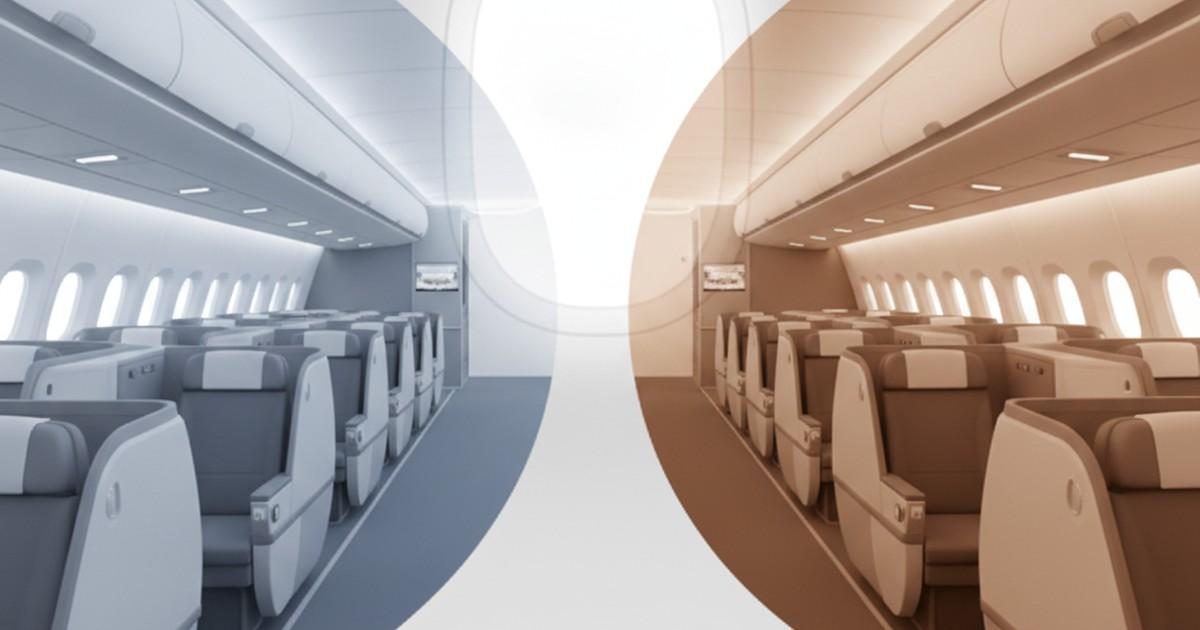
Seat Layout & Privacy: Korean Air vs Asiana Business

Korean Air’s Apex Suite provides significantly superior privacy and a more spacious bed than Asiana’s staggered Business Smartium seat, particularly for window seat passengers who enjoy a fully enclosed private nook. While both layouts guarantee direct aisle access for every traveler, Asiana’s staggered design leaves many seats highly exposed to the aisle, whereas Korean Air's clever offset layout acts as a physical barrier against foot traffic.
TL;DR: Key Takeaways
- Privacy Winner: Korean Air’s Apex Suite offers near-first-class privacy in window seats with motorized partitions.
- Aisle Access: Both provide direct aisle access, but Asiana uses a 1-2-1 staggered layout, while Korean Air uses an offset walkway.
- Seat Consistency: Asiana features a layout lottery, leaving some aisle-adjacent seats highly exposed.
- Couples Choice: Asiana’s honeymoon middle seats are superior for partners traveling together.
- The Verdict: Choose Korean Air for solo privacy and open footwells, and Asiana for couple travel and wider seat options.
What is the difference between Apex Suites and staggered seats?
To understand these experiences, you must first grasp how each airline utilizes cabin space. Korean Air’s Prestige Suite is built on the Collins Aerospace Apex Suite design, placing seats in an offset, forward-facing 2-2-2 or 2-3-2 configuration. Although seats are adjacent, the window passenger has a private walkway behind the aisle passenger's shell, preserving aisle access without disruption.
Conversely, Asiana’s Business Smartium utilizes a classic staggered 1-2-1 layout. This design alternates seat alignment row by row to utilize footwells integrated into the console of the seat ahead. Consequently, privacy and comfort vary depending on whether your seat is aligned close to the window or exposed to the open aisle.
This spatial contrast creates two entirely different passenger experiences. For a deeper analysis of this premium cabin rivalry, read our comprehensive comparison of Korean Air Apex Suite vs Asiana Business Smartium.
How do seat width and bed length compare?
When comparing physical dimensions, both airlines offer fully lie-flat beds, but distribute their space differently. Korean Air’s Apex Suite provides a bed length ranging from 78 to 80 inches with a seat width of 20.6 to 21 inches. This exceptionally long sleeping surface is highly praised by taller travelers who need room to stretch out.
Asiana’s Business Smartium offers a slightly wider seat cushion at 22 inches, but the bed length maxes out at 77 inches. Because of the staggered design, the footwell on Asiana tapers significantly as it gets deeper. Many passengers find their feet feel restricted in this tight box, a physical constraint virtually non-existent in Korean Air's open-air ottoman design.
How do the fleet variations impact your seat selection?
Both airlines operate a variety of aircraft, meaning product quality depends on the plane assigned to your route. On Korean Air, the Apex Suite is primarily found on their Boeing 787-9, Boeing 777-300ER, and Boeing 747-8i fleets. Be cautious with the Airbus A330-300, as older configurations feature the legacy Prestige Sleeper seats without direct aisle access.
Korean Air has also introduced the Prestige Suites 2.0 on their Boeing 787-10, featuring a 1-2-1 staggered layout with sliding doors. Asiana’s flagship Business Smartium is standard on their Airbus A350-900 and Boeing 777-200ER aircraft, while their Airbus A380 offers Business Suites (former First Class) alongside standard Smartium seats.
Which layout offers the best privacy for solo travelers?
For solo travelers, privacy is key, and Korean Air’s Apex Suite is the undisputed winner. When you select a window seat, you sit in a deeply recessed, private sanctuary. Once you raise the motorized privacy divider, you are entirely shielded from the aisle and your immediate neighbor.
Asiana’s staggered 1-2-1 layout is a mixed bag. A true window seat in an even-numbered row offers a large console barrier from the aisle. However, odd-numbered window seats place you directly adjacent to the aisle, leaving you exposed to cabin foot traffic. This layout lottery means solo travelers on Asiana must be extremely vigilant during seat selection.
Which design is better for couples traveling together?
While Korean Air dominates solo privacy, Asiana’s Business Smartium takes the crown for couples. Thanks to the staggered 1-2-1 layout, Asiana offers honeymoon seats in the center section of even-numbered rows. These seats are positioned directly next to each other, allowing partners to talk and share meals with ease.
On Korean Air, the Apex Suites are slightly offset even when sitting side-by-side. While you can still speak to your partner, you must lean forward to make eye contact, making the cabin feel more isolated for couples.
How does aisle access work in both business class configurations?
Direct aisle access is standard for modern long-haul business class, but the engineering differs between these carriers. Asiana achieves this simply through its 1-2-1 configuration, meaning every passenger steps directly into the main cabin aisle. There are no barriers to climb over, and the entryways are wide and straightforward.
Korean Air achieves direct aisle access on a 2-2-2 or 2-3-2 layout using an offset geometry. The aisle passenger's seat is positioned slightly forward, and a narrow pathway is carved out behind their seat shell. Window passengers use this private walkway to access the aisle.
While this system works flawlessly, some travelers find the narrow escape path slightly tight to navigate. However, this minor inconvenience is a small price to pay for the immense privacy that the offset path grants to the window passenger.
Which airline offers the superior sleeping experience?
A business class seat's primary job is to provide a restful night's sleep. Korean Air's Apex Suite excels here because of its open-concept design. Because the seat does not taper at the footwell, you can sleep on your side or bend your knees without hitting hard plastic.
Asiana's Business Smartium offers a comfortable padded surface, but the tapered footwell can frustrate restless sleepers. Additionally, if you are in an aisle-adjacent seat, the proximity to the walkway means you are more likely to be woken by cabin noise. Korean Air also provides a thick mattress pad on ultra-long-haul routes, whereas Asiana’s bedding lacks a dedicated mattress topper.
How do storage and in-flight entertainment compare?
In-flight entertainment (IFE) and storage are crucial elements of passenger comfort during a long flight. Korean Air’s Apex Suites feature generous seatback monitors, ranging from 17 to 23 inches, providing crisp viewing. Storage is plentiful, with a deep side pocket, literature holder, and a wide console, though there is a lack of enclosed storage compartments.
Asiana's Business Smartium screens are slightly smaller, measuring 15.6 inches. Storage is functional but can feel cramped, as the side console occupies space without offering deep, enclosed wells. Both airlines provide universal power, but Korean Air’s newer cabins offer updated USB-C charging. Compare premium ground departures by reading about the lounge offerings at Incheon Airport a side by side look.
How do these cabins affect the dining and service experience?
The physical layout directly influences service delivery. Because Asiana’s staggered layout places every seat immediately next to the aisle, the crew can deliver seamless, attentive service without leaning over partitions. This physical ease complements the warm, highly personalized service culture comparing Korean Air and Asiana hospitality.
On Korean Air, high partitions in the Apex Suite require flight attendants to occasionally reach over the divider to hand you meals. Regardless of the physical layout, both carriers excel at presenting high-quality culinary programs. You can explore the iconic menus in our article about Korean cuisine at 35000 feet bibimbap and beyond.
What is the best way to book these business class seats using miles?
Booking these premium cabins with points and miles depends heavily on alliance partnerships. Korean Air is a member of the SkyTeam alliance, making its Apex Suites accessible through programs like Air France-KLM Flying Blue or Delta SkyMiles. Delta partner awards can occasionally be expensive, but Flying Blue frequently offers excellent promo rewards.
Asiana Airlines is a member of the Star Alliance, which opens up massive award availability through popular loyalty programs. You can book Asiana's Business Smartium using United MileagePlus, Air Canada Aeroplan, or Avianca LifeMiles, often with very low taxes and fees.
To master the nuances of alliance bookings and secure the best redemption rates, refer to our comprehensive guide on the best ways to book with miles Skyteam vs Star Alliance.
How to choose the perfect seat for your next flight?
When deciding between these two elite Korean carriers, follow this simple checklist to guarantee the ultimate flight experience:
- Check the Aircraft Type: Target Korean Air's Boeing 747-8i, 777-300ER, or 787-9 for Apex Suites, and Asiana's Airbus A350-900 or A380 for Business Smartium.
- Analyze the Seat Map: If flying Asiana solo, always select an even-numbered window seat to ensure maximum privacy.
- Prioritize Bed Length: Taller travelers should choose Korean Air’s Apex Suite to avoid Asiana's tapered footwells.
- Align with Your Alliance: Choose Korean Air for SkyTeam benefits, or Asiana for Star Alliance points.
Open your preferred loyalty search engine, compare award availability, and secure your lie-flat seat today.



 Saily eSIM