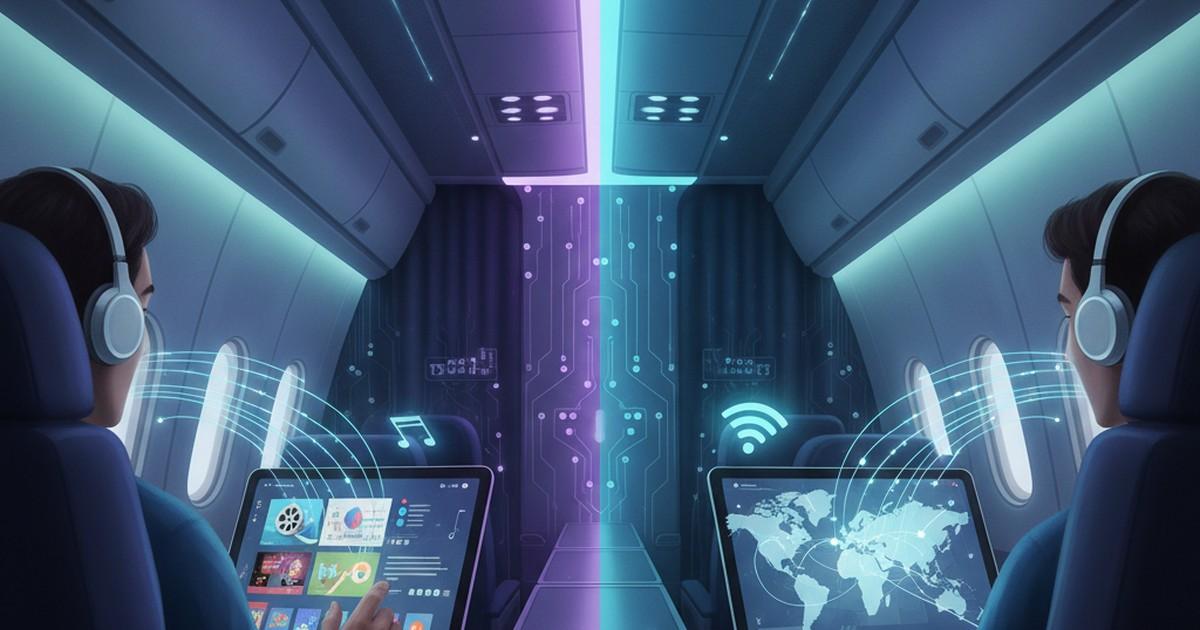
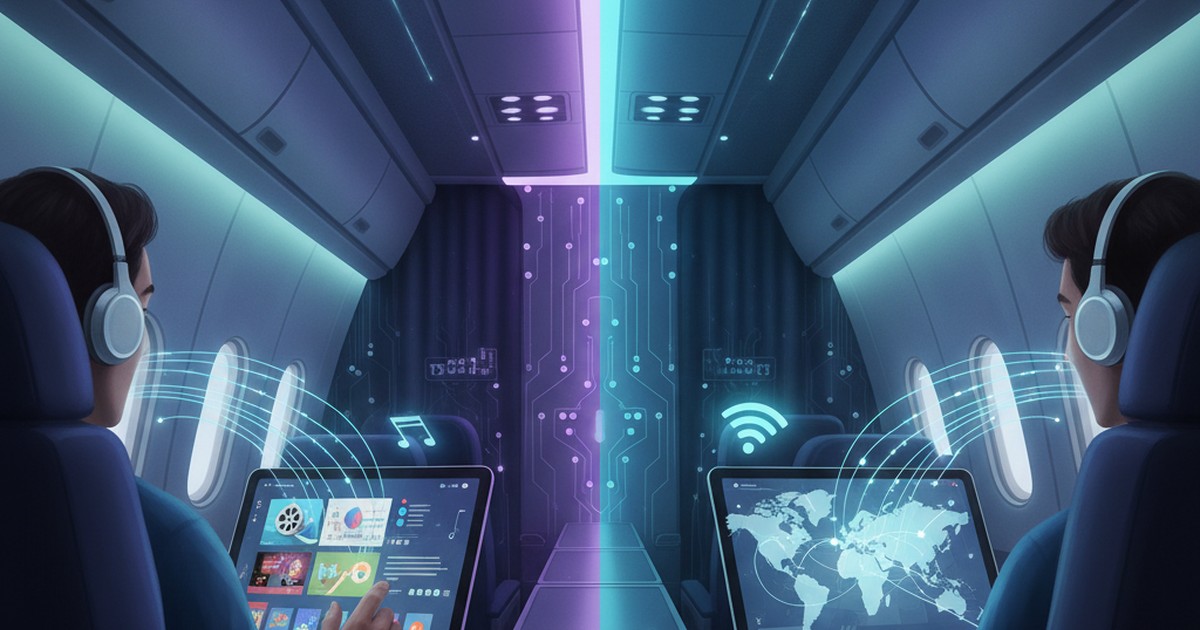
In-Flight Entertainment and WiFi: A Tech Comparison
Singapore Airlines and Cathay Pacific offer some of the aviation industry's most advanced in-flight entertainment (IFE) and onboard WiFi services, but Singapore Airlines wins slightly on fleet-wide complimentary WiFi access for all KrisFlyer members across all cabins, while Cathay Pacific excels in cutting-edge hardware like 4K HDR screens, Bluetooth audio, and the state-of-the-art Aria Suite IFE interface.
Depending on your priorities as a passenger—whether you need uninterrupted high-speed internet to work or want a cinematic theatrical experience at 35,000 feet—each airline brings distinctive strengths to the table. Let us break down the core differences in this comprehensive digital review.
The Digital Comparison: TL;DR
- WiFi Accessibility: Singapore Airlines offers free, unlimited WiFi to all KrisFlyer members across all cabin classes, including Premium Economy and Economy.
- Next-Gen Connectivity: Singapore Airlines has announced a partnership with Starlink to roll out ultra-fast, low-latency LEO satellite internet beginning in early 2027.
- Hardware & Screen Quality: Cathay Pacific leads with spectacular 4K HDR screens (up to 24 inches in its new Aria Suite Business Class) and integrated Bluetooth audio pairing.
- Content Selection: Both airlines feature massive libraries with thousands of on-demand choices, though Cathay Pacific holds the crown as the 2025 Skytrax Award winner for Best Inflight Entertainment.
How does WiFi pricing and availability compare?
Staying connected in the air has shifted from an expensive luxury to an expected standard. Singapore Airlines became an industry pioneer in January 2023 by offering unlimited free WiFi to all Business Class passengers. By mid-2023, this benefit was extended to KrisFlyer members in Premium Economy and Economy, making SIA one of the most generous airlines for complimentary connectivity.
Following the retirement of its small Boeing 737-800 fleet in October 2025, Singapore Airlines now offers 100% WiFi coverage across its entire active fleet. The carrier utilizes Panasonic Ku-band and SITAOnAir GX Ka-band networks, delivering average speeds of 6 to 9 Mbps. To access this service for free, travelers simply need to link their KrisFlyer membership number to their booking prior to boarding.
Cathay Pacific has rapidly caught up by making its high-speed WiFi complimentary for all First and Business Class passengers. In late 2025, Cathay expanded complimentary access to Cathay Diamond and Gold loyalty members across all cabins, and extended free access to Cathay members in Premium Economy. If you are traveling in Economy without elite status, Cathay Pacific charges the following fixed rates for internet access:
- Flights under 6 hours: US$12.95 for unlimited access.
- Flights over 6 hours: Between US$16.95 and US$24.95, depending on the route.
- Messaging plans: Cheaper, text-only packages are available for passengers who do not require full web browsing.
Which airline has the better in-flight entertainment screens and hardware?
When comparing physical hardware, Cathay Pacific currently leads the industry with its state-of-the-art displays. On its newly retrofitted Boeing 777-300ER aircraft, Cathay has introduced the highly anticipated Aria Suite. This Business Class cabin features a massive 24-inch 4K touchscreen that delivers unparalleled color accuracy and depth.
Even in Cathay's narrower regional aircraft, like the Airbus A321neo, passengers enjoy beautiful 15.6-inch 4K HDR screens. Crucially, Cathay's modern fleet supports Bluetooth audio pairing. This means you can pair your personal wireless earbuds, such as Apple AirPods or Bose QuietComfort, directly with the screen, eliminating the hassle of tangled headphone cords.
Singapore Airlines provides an excellent but slightly older hardware setup on most of its long-haul fleet. Its Airbus A350, A380, and Boeing 777-300ER aircraft offer 18-inch high-definition screens in Business Class. While the picture quality is incredibly sharp, a major drawback on many of SIA's Airbus A350 long-haul flights is that the 18-inch screen is not touch-enabled, forcing passengers to navigate using a tethered handheld remote control.
The physical integration of screens also impacts overall space. For a deeper look at physical cabin differences, read our comparison on seat comfort and layout to see how screen placement matches up with seat width.
How do the content libraries and user interfaces stack up?
In terms of library size, both carriers offer overwhelming choice, but their curation philosophies differ. Singapore Airlines' KrisWorld system provides over 1,900 entertainment options. This includes a robust selection of international cinema, complete TV box sets, and curated audio playlists designed to cater to a global passenger base.
Cathay Pacific features over 10,000 media assets in its library, securing its place as a top-tier entertainment provider. Cathay has partnered with major streaming giants to offer dedicated Disney+ Original titles and HBO Max content. It also broadcasts live sports on selected aircraft, ensuring sports fans never miss a critical game while crossing the Pacific.
Furthermore, Cathay Pacific has revolutionized user interface design through a partnership with Reaktor Aero. The new interface features an ultra-intuitive layout and includes five pre-set "Activity Modes" for travelers in the Aria Suite:
- Movie Mode: Reclines the seat to a relaxed viewing angle and dims the cabin lights.
- Dine Mode: Shifts the seat upright and illuminates a localized spotlight on the tray table.
- Work Mode: Maximizes workspace lighting and sets the seat to an ergonomic posture.
- Relax Mode: Lowers the lighting to a warm, gentle glow for casual reading.
- Sleep Mode: Turns off all screens and prepares the seat for fully-flat resting.
To see how these premium cabin features translate into the overall travel experience, explore our comprehensive business class review of both airlines.
What next-generation tech upgrades are coming soon?
The tech landscape at 35,000 feet is moving rapidly, with both airlines committing to massive system-wide upgrades. In May 2026, Singapore Airlines announced a historic partnership with SpaceX to install Starlink WiFi across its long-haul fleet. This represents a monumental leap forward in airline connectivity.
Starting in the first quarter of 2027 and completing by 2029, Singapore Airlines will equip its Airbus A350-900 and A380 fleets with Starlink's Low Earth Orbit (LEO) satellite technology. Starlink's system can support speeds up to 1 Gbps per aircraft antenna. This will allow passengers to stream 4K video, play low-latency online video games, and transfer large corporate files effortlessly. Best of all, SIA confirmed that its unlimited, complimentary WiFi policy will remain in place on all Starlink-enabled aircraft.
Meanwhile, Cathay Pacific is focusing on completing its fleet-wide rollout of 4K screens and Bluetooth audio connectivity. By standardizing high-end hardware across all wide-body and narrow-body aircraft, Cathay aims to provide a consistent, premium digital experience regardless of the route or aircraft model you board.
How does technology enhance your dining and lounge experience?
A seamless, tech-driven travel experience begins long before you step onto the aircraft. Both Singapore Airlines and Cathay Pacific utilize digital companion apps to help passengers customize their journeys. For instance, you can use their apps to preview menus, curate your IFE playlist on the ground, and sync it to your seatback screen upon boarding.
Technology also plays a key role in customizing your inflight culinary journey. If you want to compare how both airlines handle meal pre-selection, check out our dining options comparison to see how Singapore's digital pre-ordering stack up against Cathay's flexible dining. Singapore Airlines' online portal allows passengers to select elaborate meals weeks in advance via its acclaimed "Book the Cook" service.
Additionally, premium connectivity extends to the airport terminal. To see where you can find the best high-speed workspace and luxury amenities before your flight, take a look at our lounge review comparison between Singapore's SilverKris and Cathay's The Pier.
How does cabin service support your digital journey?
No matter how advanced an airline's hardware is, technical glitches can happen. A frozen screen or a dropped WiFi connection can quickly derail a long-haul flight. This is where the human element of cabin service becomes critical.
Singapore Airlines' cabin crew is highly trained in handling on-board technical issues, from manually resetting individual seatback monitors to assisting passengers with KrisFlyer login problems. Cathay Pacific's crew is similarly efficient, utilizing digital tablets to track seat outages and report connectivity issues in real-time. To understand how their service cultures compare, check out our service standards overview.
Final Recommendation: Which Airline Wins the Tech Battle?
Your choice between these two aviation giants depends on what you value most on a flight. Singapore Airlines is the clear winner for connectivity-first travelers, thanks to its free, unlimited WiFi for all KrisFlyer members and its upcoming multi-gigabit Starlink upgrade. On the other hand, Cathay Pacific is the ultimate choice for cinephiles and media lovers, offering unmatched 4K screens, Bluetooth audio pairing, and an award-winning user interface.
Ready to experience the future of premium air travel? Book your next journey with Singapore Airlines or Cathay Pacific, and make sure to register for their loyalty programs before departure to unlock free high-speed connectivity.



 Saily eSIM